

1
Write .vendo/brief.md
vendo init creates the file and drafts it from your graded tool catalog and
your code. Open it and make it yours..vendo/brief.md
vendo sync leaves it alone.2
Restart, then ask it something
The prompt is assembled fresh on every turn, but the brief is read once when
your server boots. Restart the dev server and the next turn thinks on the new
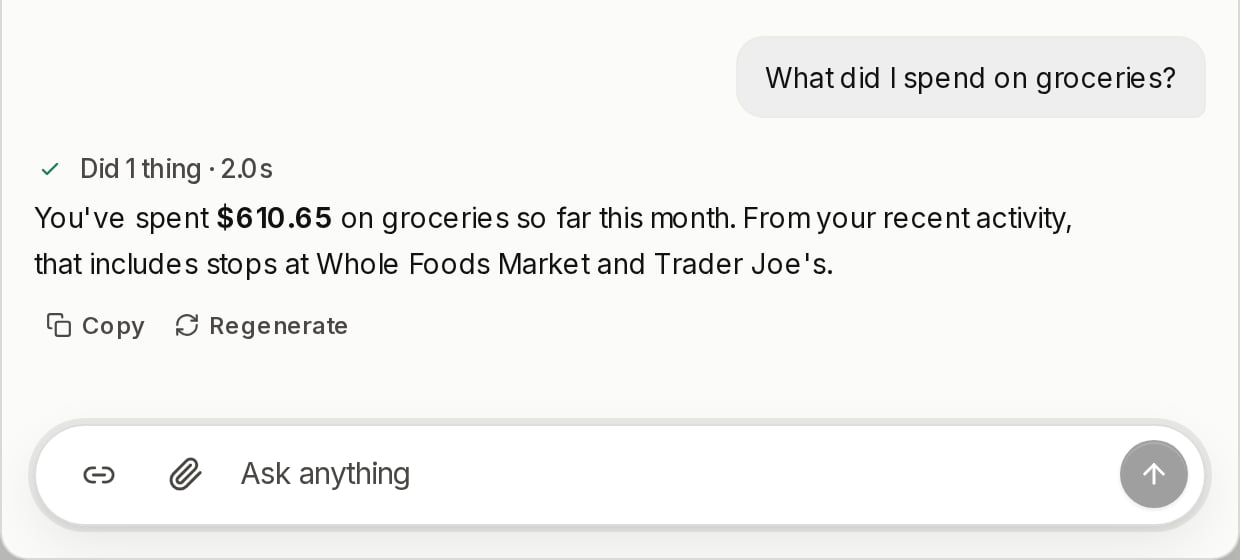
words.Ask the same question you asked before the edit. The facts come from your
tools; what changes is the voice.
Good to know
- Voice here, facts elsewhere. The brief is how your agent speaks. Answers it has to look up — policies, limits, how a feature works — belong in the knowledge base.
- Not policy either. Rules about what the agent may do are guard directions, and they ride their own section of the prompt.
- Where it lands. After Vendo’s operating sections, before the user facts, your guard’s directions, the theme line, and the knowledge index. A blank brief drops the section entirely.
- In code instead.
createVendo({ instructions })is the same slot. A non-blank string wins over the file; a blank one falls through to it. - Your own agent loop never sees it. That agent runs on your system prompt, not Vendo’s — the block to paste there is on Generate screens.